| |
|
Click on a thumbnail picture below to see the full size version.
|
72 Entries.
|
|
Sunday, March 8
|
View Page
|
 |
Hello BigPumpkins!
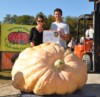
Allow us to reintroduce ourselves. It's been 13 years since Emily and I last grew. We last competed in the 2013 season, winning the VT state weigh-off with a 1,290-pounder (throwback photo attached!).
For the past decade, I poured my obsessive energy into Ironman triathlons. It was an incredible journey, but Ironman is a lonely sport. You simply can't take your family out on a 120-mile weekend training ride.
I missed the patch, the biology, and the community. But mostly, I wanted a hobby we could share. Emily and I now have a 4-year-old son, and I want him in the dirt with us.
It feels great to be back. Let's grow them big!
|
|
|
Tuesday, March 10
|
View Page
|
 |
Beat the weather window today! Soil cores have officially been pulled and are heading to Western Labs in Idaho tomorrow morning to get an exact read on the native dirt. I also managed to get the clear plastic pinned down over the patch footprint. The goal here is twofold: shed the upcoming spring moisture and trap the solar heat to accelerate the thaw. I'm on a really tight schedule between now and seed-starting, so I'm doing everything possible to ensure this ground is dry, warm, and ready for tilling by early April. The 2026 season is officially underway!
|
|
|
Saturday, March 14
|
View Page
|
 |
The Ground Game - Turning Clay into a Pumpkin Patch
Every season starts from the ground up. My future 750-sq-ft patch is currently just a backyard lawn. Because this is my first year in this location, my focus is simply building a healthy foundation.
I shipped core samples to the lab, but I already know the physical challenge: native clay silt loam. It's heavy, sticky, and holds water.
Since these plants love a highly oxygenated, fast-draining medium, I'm heavily modifying the top 20 inches.
(I should probably announce that this season is brought to you in part by Pro-Mix HP and perlite.)
As soon as the ground thaws, I'm adding:
- 30 Bales Pro-Mix HP
- 15 Bags Coarse Perlite
- 5 Yards Seacoast Compost
Once I get the lab results back, I'll learn how to properly dial in the pH and nutrients.
|
|
|
Monday, March 16
|
View Page
|
 |
The Heat Is On!
I'm seeing some encouraging progress with my early patch prep.
Just a few days ago, before I put down the clear plastic tarp, the native soil was sitting at a chilly 39.2F. I just checked under the plastic today, and the greenhouse effect is already doing some heavy lifting. The soil is up to 45.9F, almost 4 degrees higher than the uncovered grass!
I also took an EC reading while I was poking around under there. It's sitting at a super low 0.11. I'm taking this as a really great starting point. It tells me the native dirt is basically a clean slate with no leftover salt or chemical buildup from previous use, which should make a perfect, neutral base for my amendments.
Hoping this trapped heat continues to wake up the soil biology before I fire up the tiller in April!
|
|
|
Sunday, March 22
|
View Page
|
 |
From Florida Sun to Vermont Snow (But the Patch is Heating Up!)
Here in Vermont, Mother Nature isn't quite in the pumpkin-growing mindset yet. I just got home from a sunny Florida work trip to find six inches of fresh snow in the yard!
The first thing I did was grab a shovel and clear the snow off the 6-mil clear plastic covering my patch to take full advantage of the UV solar gain.
The plastic is doing an incredible job. Despite the freezing air and snow, I measured the soil temperature under the tarp and was thrilled to find it at a balmy 49.3F!
To put that in perspective, the bare, uncovered ground right next to it was practically frozen at 35.3F. That is a massive 14-degree difference just from trapping radiant heat. We are knocking on the door of 50F, meaning the soil biology is actively waking up under there.
Not long now until seed starting!
|
|
|
Tuesday, March 24
|
View Page
|
 |
Nematode Eviction Notice
Got my Western Labs test today.
Good news: zero Root Knot.
The catch: 620 Root Lesion nematodes. They won't kill a giant outright, but they chew up roots and leave the door open for disease.
Then I had a realization. That clear plastic warming my soil (55F today, almost 20 degrees warmer than outside!)? It's creating a "green bridge"; an all-you-can-eat warm buffet for nematodes to feed on the grass and multiply before the pumpkin gets transplanted.
So, I'm issuing an eviction notice.
Instead of tilling the grass in, I'm using a sod cutter to peel off the top two inches of turf. This physically removes the root mass and carts the highest nematode concentration right out of the patch. Then, I'll broadfork to crack the hardpan, and throw the clear plastic back on to bake the bare dirt and starve the rest.
What's your go-to for nematode pressure? Mustard crops, bio-drenches, or physical removal? Let me know!
|
|
|
Thursday, March 26
|
View Page
|
 |
The Seedling VIP Treatment: Rolling Out the Microbial Red Carpet
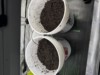
I'm experimenting with a 2-zone system in 2-gallon pots to completely eliminate transplant stress for a 3-week indoor grow.
The inner 4" zone will be clean Pro-Mix HP, providing a sterile-adjacent germination environment for the first week.
I'm currently pre-charging the outer zone, which will act as the biological engine.
My thinking behind the outer zone:
- Water Prep: My tap water uses chloramine, which won't off-gas and suppresses biology. I neutralized it with ascorbic acid, then pH'd to 6.5 for the peat medium.
- Worm Castings (6%): Blended into the Pro-Mix to act as physical housing for the microbial network to colonize.
- WOW 5:2 (Humic/Fulvic + Seaweed): Added to feed the biological community as it establishes.
- The Inoculants: Mycorrhizae, Azos, and Trichoderma incorporated throughout.
This outer mix is pre-charging on an 80F heat mat for 7 days to activate the spores. When the root pushes out of the clean inner zone, it drops right into a living, fully functioning ecosystem. Ill fill 2 gallon pots tonight.
Overcomplicating? Likely, but I can't help myself.
|
|
|
Sunday, March 29
|
View Page
|
 |
Seed Selection: Next Generation Heavy Orange
After 13 years away from the patch, it feels incredibly good to be starting seeds again. There are so many amazing genetics available now I've easily spent hours going back and forth on strategy and which seeds would best execute it. Where I landed was attempting to create a cross that expresses both heavy-to-chart density AND Howard Dill-potential orange.
This year's cross: 2741.5 Haist (f) x 2453 Sherwood (m).
The "why" behind the genetics: The Haist brings three generations of accelerating density with same-patch, same-year standout heavy-to-chart performance. The Sherwood is the largest Howard Dill winner ever recorded, bringing elite size and color genetics. What's even more compelling is that this Sherwood seed produced five Howard Dill winners in its first year out.
Beyond their individual traits, a four-generation pedigree analysis shows only ~19% shared ancestry between these two lines meaning roughly 81% genetic divergence. That divergence will hopefully result in hybrid vigor.
The primary goal isn't a pretty pumpkin this year. It's seeds for a future generation that are both predictably heavy AND beautiful.
Seeds are soaked. Two Haist, two Sherwood. Fingers crossed I don't fry these in the wet paper towel!
|
|
|
Tuesday, March 31
|
View Page
|
 |
The Sod Slog
This weekend I spent two days removing 750sqft of sod. The patch transformation has begun. Two inches deep, completely saturated from a wet Vermont spring. Rough estimate somewhere around 6,000 lbs moved twice; once into the wheelbarrow, once out as fill. My back knows all about it.
There's actually a practical reason beyond just clearing the ground. My soil test came back showing Pratylenchus lesion nematodes at levels worth paying attention to. My guess is they are concentrated heavily in the top couple inches of soil where the sod root mat is thickest. The clear plastic I've had over the patch the last two weeks brought soil temperatures up to 60 degrees, so I'm hoping they woke up and started migrating into the top couple inches. Pulling that layer out physically removes a big chunk of the population before it will ever see my pumpkin roots. No chemistry needed yet, just a lot of trips with the wheelbarrow. I also didn't want the sod breaking down in place, as it robs nitrogen from the soil.
A lot of heavy lifting still ahead. 5 yards of compost being delivered next week.
|
|
|
Tuesday, March 31
|
View Page
|
 |
They're Alive!
Four seeds started. Four seeds cracking. I have to admit I was a bit nervous. I haven't done this in 13 years and I was starting $300 worth of seed genetics all at once.
The process was pretty "straightforward." I sanded the edges of each seed lightly to thin the hull and help moisture penetrate faster. Just the seam edges, not the faces or root tip. Then soaked them for 90 minutes in a diluted seaweed extract and hydrogen peroxide solution using John Young's paper cup trick to keep them submerged.
From there, damp paper towels soaked in the same seaweed solution, seeds wrapped up and sealed in zip lock bags. Heat mat connected to a temperature probe tucked right against the bags to hold 85-90 degrees. Dish towel over the top and underneath to insulate and hold the heat in.
33 hours later, all four seeds had root tips emerging almost simultaneously. Both Haists slightly ahead of the Sherwoods, with one Haist leading the pack.
Carson was pretty excited to see the little white roots poking out of the seeds. Honestly, so was I. It always amazes me to watch a seed wake up from dormancy.
Now we get them in the ground before those roots get any bigger.
|
|
|
Tuesday, March 31
|
View Page
|
 |
Officially Planted!
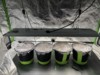
After 33 hours in the paper towels, all four seeds had radicles emerging and it was time to move fast. Only an hour after first checking with Carson, the Haist radicles were already noticeably longer.
Dusted each root tip with Azos and added mycorrhizae directly to the planting hole so the radicle made contact on the way down. Covered, wrapped in saran wrap, heat mat dialed to 82°F at the soil probe.
This year I'm starting about three weeks earlier than I typically would. The thought is to have the height of the growth curve roughly DAP 30 through 60, where a well-managed pumpkin is putting on 50 lbs or more per day, land squarely in the warmest nights of July and early August. Vermont nights start cooling meaningfully in late August, and cell expansion is temperature dependent. Timing matters.
It'll also give the pumpkin a full 100-110 days of growth before the Vermont weigh-off on September 19th at Sam Mazza's Farm.
Now we wait. Cotyledons should push through the surface in the next few days if everything goes right. Fingers crossed they all emerge!
|
|
|
Friday, April 3
|
View Page
|
 |
48-Hour Emergence, Helmet Heads, and Toddler Evasion:
All four seeds broke the surface in about 48 hours! The two 2741.5 Haists are looking incredibly strong and pushed up clean, sitting slightly ahead of the 2453 Sherwoods.
One Sherwood is battling a stubborn "helmet head". In hindsight, I definitely should have filed the edges of that massive seed a bit more. I'm keeping the shell moist to soften it up before I attempt any manual surgery.
With cotyledons opening, they'll get their first feed: a diluted kelp and fulvic acid drench. Water prep remains strict: tap water neutralized with ascorbic acid to strip the chloramine, then pH'd down to 6.5 for the Pro-Mix sweet spot.
Honestly, the biggest threat to these genetics right now is my 4-year-old son who is obsessed with checking on them (warms my heart). A toddler's hands somehow touch everything in the room simultaneously, but by some miracle, he's managed to keep his mitts off the actual seedlings. So far, so good!
|
|
|
Saturday, April 4
|
View Page
|
 |
Trunks, Tacos, and the First True Leaves
The 2741.5 Haist seedlings are absolutely cruising. I definitely pushed the limits on light intensity the last couple of days, running the Mars Hydro at 8 inches (25 percent) made the cotyledons curl downward ("taco-ing") a bit to hide from the photon overload.
The silver lining? The etiolation response was completely shut down. The hypocotyls are built like tree trunks. Im also running a light fan and dropping nighttime temps to 68F. There is zero stretching.
But the biggest news is right in the center of the V: the first true leaf is officially pushing up! That tiny, fuzzy leaf means we are transitioning from the seed's internal battery to the vegetative engine.
Tomorrow I'm backing the light up to 12 inches to let the cotyledons relax and flatten out, and I'll be shifting gears on the feed. They will get a micro-batch of kelp, fulvic acid, fish hydrolysate, and RAW Aminos to start priming those calcium channels.
The engine is officially running!
|
|
|
Thursday, April 9
|
View Page
|
 |
The "Day Off"
The definition of a relaxing day off from work: manually wrestling a broadfork 14 inches deep into native compact soil. I'd be perfectly fine if I don't look at that tool again for the rest of the year. Phew.
But there's a vital reason I chose this painstaking chore over simply firing up the rototiller. Running a tiller through heavy, early-spring soil smears the earth at the bottom of the tines, creating a compacted hardpan that acts like a bowl. Giant pumpkins absolutely hate wet feet. If those taproots hit a hardpan barrier and sit in stagnant water, they suffocate, inviting root rot and disease.
Broadforking breaks up the soil 14 inches down while keeping the natural aggregate structure intact. Less resistance for the roots, far better drainage. Happy roots make heavy pumpkins.
With the fracturing done, tomorrow is all about building up. I'll be layering 6 inches of fresh material across the patch, a custom blend of leaf and yard compost, Pro-Mix, coarse perlite, and dry amendments. No stones unturned. Literally, I turned them all.
Now, time for some ibuprofen.
|
|
|
Friday, April 10
|
View Page
|
 |
Day 10: Ahead of Schedule and Calling an Audible
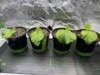
We are 10 days out from placing seeds in the dirt, and I am very happy with the progress. The plants are robust, and the Haist genetics in particular are well ahead of schedule, already pushing first true leaves over 8 inches in diameter.
However, that rapid growth created a slight bottleneck. Because the Haists expanded so quickly, I started seeing calcium stress; a yellowing along the outer edges of the leaves. The plants were building cell walls faster than available calcium could keep up, resulting in pale outer margins.
To correct this, I called an audible. Instead of waiting on the calendar, I bumped the plants up to my Week 3 nutrient schedule early to match their actual biological development. Here is the breakdown of the Week 3 mix and why each component matters right now:
Ascorbic Acid: Added directly to the water first to neutralize chloramine. This protects the delicate soil biologicals from being wiped out by municipal water treatment chemicals.
Calcium Nitrate: Provides highly soluble, instantly bioavailable calcium to correct the pale margins, plus the nitrogen to fuel continued vegetative growth.
RAW Aminos: Calcium is difficult for roots to absorb on its own. The amino acids act as chelators, wrapping calcium ions so they pass easily through the root membrane and stay in plant-available form.
Liquid Opulent Boron (1ppm): If calcium is the building block, boron is the gatekeeper. It facilitates calcium uptake at the root membrane and helps bond calcium into the cell wall structure where it is needed.
Fulvic Acid and Kelp: Fulvic acid is a natural transporter that makes the entire nutrient mix more bioavailable. Kelp provides natural hormones - cytokinins - that signal the roots to expand and support the top growth.
RAW Silica: Acts as structural reinforcement inside the plant's cell walls, giving the leaves rigidity and strength. Critically, I use RAW Silica because it is pH neutral. Traditional liquid silicates are highly alkaline and will instantly react with calcium nitrate in the mixing jug, causing the calcium to precipitate out as useless sludge. RAW Silica prevents this reaction, keeping both nutrients fully available.
The plants responded exactly as intended. By the next morning the leaves had flattened out, the drooping stopped, and the inner canopy was already darkening up.
|
|
|
Friday, April 10
|
View Page
|
 |
What It's All About:
We had some friends over tonight, and Carson was excited to show everyone the grow tent. They all crowded around to check out the plants and even picked their favorites. It's so easy to get caught up in the minutia when growing these giants, but seeing how much fun the kids had tonight brings it all back down to earth. This is really what it's all about; the kiddos, and of course, the pumpkins. ??
|
|
|
Tuesday, April 14
|
View Page
|
 |
Peeled back the tape on the clam shell slit of my most aggressive 2741 Haist seedling today. Roots are white, healthy, and already within 1.5 inches of the pot bottom at two weeks. These plants are ready to find some real soil.
Transplant into the hoop house is two to three days out max. Can't wait to see what happens when this root system hits open ground.
|
|
|
Thursday, April 16
|
View Page
|
 |
I've been hardening off the last few days. Overall they have taken the outdoor sun fairly well.
|
|
|
Thursday, April 16
|
View Page
|
 |
I've been hardening off the last few days. Overall they have taken the outdoor sun fairly well.
|
|
|
Thursday, April 16
|
View Page
|
 |
My most aggressive plant, one of the 2741 Haists. Took a sneak peak at the roots. This thing is ready to exit its 2 gallon pot. Soil temp in the hoop house is 70. Tomorrow is planting day!
|
|
|
Saturday, April 18
|
View Page
|
 |
75 and sunny today. Snow tomorrow.
Planting day is today. This "seedling" has outgrown its 2 gallon pot just 16 days from planting and has a vine ready to run.
Preparing the hoop house with a space heater and two buckets with 90 degree water with heaters on them. In combination with the soil heating cables hopefully that does the trick over the next several days.
Carson is enjoying the hoop house.
|
|
|
Saturday, April 18
|
View Page
|
 |
I burried soil heating cables last weekend. Using Travis G's method of going deep and layering. I started the first level at 24 inches deep then another at 16 and another at 8. As of this morning the soil was 68 degrees down at 24 inches and 71 at 6 inches.
|
|
|
Saturday, April 18
|
View Page
|
 |
Official planting day for the 2741 Haist! I'm really excited about this one. It stood out from the rest of the seedlings right away. Thick stems, the fastest growth, zero issues, and an incredibly aggressive root system. It's only been 17 days since the seed went into the dirt, and she's already pushing the main vine and starting her first side vine.
I gave the first true leaf a slight nick while taking the bucket off, but overall, the clamshell pot method made the transplant incredibly easy. We dusted the hole with WOW starter packs, Azos, and WOW granular mycorrhizae, then watered her in with a warm brew of kelp, fish hydrolysate, fulvic acid, and Mykos WP.
It was awesome having my right-hand man, Carson, there to help settle her in. The real test comes now, though as we've got nighttime temps plunging into the high 20s over the next few days. Time to see what this setup can do.
|
|
|
Sunday, April 19
|
View Page
|
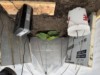 |
Welcome to spring in Vermont: 75 and sunny yesterday, windchill of 27 and snowing today.
To fight the freeze, I built a secondary wall using 2-inch rigid foam insulation around the plant to catch and hold the heat from the space heater. Tonight, I'll drop another foam board right across the top to lock the warm air in completely.
There is a silver lining to the weather, though. The gloomy, overcast skies mean minimal transpiration stress on the canopy, allowing the plant to focus 100% of its energy on early root establishment in the new mound without fighting the sun.
Pushing a plant out this early is always a gamble. But if we can grind through these cold snaps now, the bet pays off with an early pollination, putting our peak pumpkin growth perfectly in sync with the warmest nights of July and August.
|
|
|
Sunday, April 19
|
View Page
|
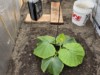 |
24 hours post-transplant, 19 days after planting the seed, and the 2741 Haist is looking incredibly happy in the dirt. The vine tip is already stretching, and the leaves have fully perked back up from the move.
The thermal bunker is doing exactly what it needs to do, holding a perfect 70 degrees inside while it sits at 35 degrees outside.
Looking back at the indoor stage, we battled a brief nutrient deficiency that looked like a magnesium lockout. Checking the deep, consistent green on this newest leaf growth, I think it's safe to say we have that completely sorted out. It seems the roots are already firing on all cylinders after yesterday's biological spa treatment.
|
|
|
Sunday, April 19
|
View Page
|
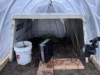 |
All tucked in for the night. The final 2-inch foam board is in place, officially sealing up the thermal bubble. Between the space heater, the 90 degree water bucket, and the soil cables running at 70, hoping she won't even know it's snowing outside. Catch you all on the other side of the freeze!
|
|
|
Monday, April 20
|
View Page
|
 |
Well she made it thru the night happy as a clam. Kept at a steady 68 degrees all night. The real test will come tonight as we are expecting windchills in the mid teens.
|
|
|
Tuesday, April 21
|
View Page
|
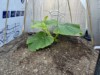 |
Temperatures plunged into the teens last night, but the 2741 Haist seems to have only built momentum. The thermal bunker held the line perfectly. Between the 2-inch rigid foam, a 1500w space heater, a water bucket set to 90F, and the soil cables dialed to a steady 72F, all systems are a go.
The forecast calls for warmer but still cold nights ahead, however the worst of the deep freeze seems to be behind us for now.
|
|
|
Wednesday, April 22
|
View Page
|
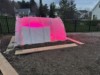 |
Backyard rave? Nah, just giant pumpkins.
After giving the 2741.5 Haist a few days to focus on root establishment while minimizing canopy stress, it's time to shift gears. I'm adding supplemental lighting from 6:00-10:00 AM and 6:00-10:00 PM to extend the daylight hours. I'm using a LumiGrow Pro 600, dialing in that classic pink mix pushing heavy red for raw photosynthetic power, balanced with just enough blue to keep the vegetative growth thick and tight. Emily might be slightly embarrassed by the glowing pink yard, but I think it'll grow on her.
On another note, I've given away two backup seedlings and some seeds to friends just starting out. Hopefully, they catch the bug and help grow the hobby locally.
At 22 days from seed, the main vine is moments from touching down in the dirt. It's almost go time!
|
|
|
Saturday, April 25
|
View Page
|
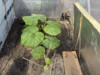 |
One week after planting outdoors and the 2741 Haist is off and running. All leaves that have grown while outdoors look happy as can be. I'll definitely transplant my two gallon pots within 10 fays from germination next year. 16 days was too long. Im estimating about 4 feet of man vine. I'll need to get my 10x20ft Quictent up tomorrow because she's sure to outrun the current hoop house within the next four days.
|
|
|
Saturday, April 25
|
View Page
|
 |
Not a bad way to spend an evening. :-)
|
|
|
Tuesday, April 28
|
View Page
|
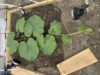 |
Four weeks from seed and the 2741.5 Haist is officially moving. Seven inches of vine growth yesterday, ten inches today. Main vine sitting at 5.5 feet and accelerating.
The Quictent is doing its job. I've started actively tracking air temperature, humidity, and VPD inside the tunnel using an AC Infinity sensor, which has been eye-opening. I can only control the elements so much out here in Vermont, but the data is helping me target the 0.8-1.0 kPa VPD sweet spot; the range where stomata are fully open, gas exchange is maximized, and the plant is working instead of defending. When VPD climbs above 1.2 on hot dry days, transpiration demand outpaces what the root system can deliver and growth stalls. Keeping it dialed in has made a real difference.
Drip irrigation tape goes in over the next couple of days. Until then I've been hand-watering twice daily in light spoon-fed batches to keep soil moisture consistent without oversaturating the establishing root zone.
Morning Feed:
RAW Amino Acids, Fulvic Acid, Kelp Extract, Calcium Nitrate, Companion Bacillus (Mondays), Azos Red (Mondays)
Evening Feed:
Plant Marvel 12-31-14, RAW Amino Acids, WOW 5:2 Humic/Fulvic, Epsom Salt (Mondays), Fish Hydrolysate (Tuesdays)
The split feed design is intentional. Calcium nitrate and magnesium sulfate (Epsom) cannot be mixed in the same batch. Calcium and sulfate ions combine to form calcium sulfate precipitate, locking both nutrients out of solution before the plant can access them. Running calcium in the morning feed and sulfates in the evening feed solves this cleanly while still delivering both nutrients daily.
The amino acids in both feeds aren't just an organic nitrogen source. L-glycine and L-glutamic acid specifically activate the calcium ion channels in root cell membranes, making the calcium nitrate that follows significantly more bioavailable. The sequence matters.
Biologicals go in last and right before watering. Companion Bacillus and Azos are living organisms that lose viability sitting in solution. Adding them at the moment of application rather than mixing them overnight preserves their colonization potential at the root zone.
Plant Marvel 12-31-14 deserves a mention. Beyond the NPK there's a full chelated micronutrient package; boron, iron, manganese, zinc, copper, molybdenum all in chelated form for maximum bioavailability across a wide pH range.
Running this through the drip program means the plant is getting a complete mineral profile twice daily without separate micronutrient additions. Plant Marvel's lineup will be my workhorse this year.
The fulvic acid works as a chelation and transport amplifier. It increases membrane permeability and binds mineral ions into plant-available complexes. At establishment phase I'm running it at conservative rates; it'll ramp as the root system expands and can handle the increased uptake efficiency.
Weather looks cool for the next couple of weeks which is fine by me
|
|
|
Saturday, May 2
|
View Page
|
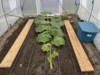 |
Day 32 from seed. It's incredible how fast these genetics move once they take hold. The 2741.5 Haist is currently sitting at a 7.5-foot main vine and is already starting to push some thick, aggressive secondary vines.
I got the drip tape laid out in the hoop house today. Unfortunately, I'm still waiting on Greenhouse Megastore to ship a few critical valves I ordered back in February so I can connect the tape to the mainline. Hoping those arrive this week so I can finally switch over to the automated tanks. The silver lining: while lightly raking the dirt to lay the tape, I found the ground is already loaded with healthy, bright white roots stretching out. The underground engine is definitely building nicely.
Overall, I'm pleased with the growth, especially given the conditions. In the 14 days since putting her in the dirt, we've fought through seven nights in the 30s, including a few harsh drops into the teens and twenties. It's required a lot of late-night manual labor to insulate and protect an ever-growing footprint, but the plant itself hasn't seen a single night below 68°F. The extra effort is paying off.
|
|
|
Sunday, May 3
|
View Page
|
 |
The main vine crossed the 8 foot mark today and revealed the first female. This one will get pinched but it's always nice to see the plant is ready to produce pumpkins.
|
|
|
Sunday, May 3
|
View Page
|
 |
The yellow circle is the main vine. The red circle is a secondary. While the main vine on this plant is no slouch, nearly identical thickness on the first handful of developing secondaries has me encouraged. Hopefully this is a great sign of vigor and the plants ability to efficiently push nutrients.
|
|
|
Sunday, May 3
|
View Page
|
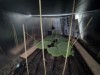 |
After the grow lights finish their evening extension I close up the hoop house to hold temperature through the night. Targeting mid-to-high 60s inside with relative humidity around 70% - that range keeps disease pressure manageable while still allowing the plant to keep moving despite overnight lows in the high 30s outside.
|
|
|
Tuesday, May 5
|
View Page
|
 |
Got my post-amendment soil test back and the results are encouraging, but they also confirm what most growers find out the hard way - building a world-class pumpkin patch takes years, not weeks.
The good news: organic matter jumped dramatically after all the work I put in this spring. Texture reclassified, pH came down to a nice 6.7, potassium moved from Low to High, and the overall biological environment is measurably better than the raw lawn I started with. A lot of hard work went into that and it shows.
The reality: calcium is lagging below the target threshold, boron is on the low side, and there are a few other numbers I'll be chasing for the next season or two as I continue dialing in the patch. That's just the nature of building soil from scratch.
The good news is I feel I have a well-designed drip program to compensate for a lot of what the soil isn't yet providing on its own. Calcium nitrate goes in every morning, and the Plant Marvel 12-5-19 HiCaMg formula delivers additional calcium per afternoon feed - so the plant is getting hit from both directions twice a day. RAW Amino Acids go into every feed alongside the calcium - the L-glycine and L-glutamic acid activate calcium ion channels in the root cell membranes, making the calcium significantly more bioavailable than the raw numbers alone would suggest. Fulvic acid in every feed increases membrane permeability further. Boron is being delivered continuously through the Plant Marvel formula itself at levels the soil currently can't supply on its own.
Year one is about learning what your soil needs. Year two is when you actually fix it. I feel like I took a giant leap in the right direction, and in the meantime the plant doesn't seem to know the difference. 14 inches of main vine growth in the last 27 hours.
|
|
|
Sunday, May 10
|
View Page
|
 |
Main vine continues to move in earnest, about 6 feet of new growth over the past week, now sitting just shy of 14 feet. A new female just showed in the tip that I expect will land around 18-19 feet out. Normally that would be my target pollination but secondary development has been slow and hit or miss. Hoping things ramp up over the next two weeks and give me more confidence in the amount of plant behind the pumpkin before I commit.
Noticing some pale green in the leaves. My soil test came back showing iron and manganese significantly below benchmark, so Im adjusting the program accordingly. Transitioning to a focused deficit correction approach; supplementing calcium, iron, and manganese through the drip while pulling back on the NPK. The soil is already well loaded on nitrogen and potassium so I'm letting it do that work.
Also kicked off the cell division protocol ahead of pollination; doubled kelp extract for cytokinin loading, added Triagrow for triacontanol delivery, and Helena Prophyt for gibberellin activation.
Biological rotation continues with SP-1, Azos Red, Mykos WP, Companion, and RootShield WP on their normal schedule.
Nights have been dipping into the low 30s and even the 20s. The Quictent has been doing its job keeping the plant alive through these cold snaps. Good thing the weather looks to be turning this week as the plant is about to outgrow the temporary greenhouse.
|
|
|
Wednesday, May 13
|
View Page
|
 |
Will this be the one? Time shall tell.
|
|
|
Sunday, May 17
|
View Page
|
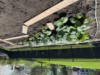 |
Big milestone this week - Emily and I took down the Quictent. The 10x20 temporary greenhouse had served its purpose but the plant had already reached the end and secondaries were starting to climb the walls. Time to let it breathe.
You can see in the photo how much ground the plant is already covering. Main vine is sitting at 17 feet. Growth slowed a bit this week - cold rainy weather with multiple days in the 40s, dialing back nitrogen ahead of pollination, and energy shifting toward secondary development which has finally taken off.
Given it's only May 17th and only 6.5 weeks from seed planting date, I feel like I got away with one this spring. With the 10 day forecast showing heat and humidity, the patch is wide open now and ready to fill in.
|
|
|
Sunday, May 17
|
View Page
|
 |
Got to spend some great time in the patch with Carson this week.
Hard to tell what's bigger - the plant or the kid. Those leaves are nearly as wide as he is tall at this point.
He spotted some thick white roots crawling out of the soil near a buried node and looked up at me completely serious and said he thought they were yarn. Cant argue with the logic. Roots this size and this far from the stump at 6.5 weeks are exactly what you want to see underground.
He has also become very proud of his vine burying duties. Have at it kid!
|
|
|
Sunday, May 17
|
View Page
|
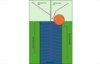 |
Believe it or not I've started trimming secondary vines. Counter intuitive but there's a method to it.
My patch is on the smaller side at 750-800 square feet. The diagram shows the strategy - maximize root nodes while minimizing the average distance from those nodes to the pumpkin nutrient sink. Five zones total. The main vine runs up the center. Two super secondaries before the pumpkin and two after each get their own dedicated 125 square feet. Tertiaries grow off these - think of them almost as mini main vines funneling nutrients directly into the four nodes closest to the pumpkin stem.
First year trying this. We'll see how it works.
|
|
|
Sunday, May 17
|
View Page
|
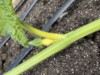 |
Here she is. Female bud sitting around 17 feet out on the main vine. Pollination is roughly a week away.
Hard not to like the look of that bright yellow. Fingers crossed it translates to a deep orange pumpkin - always a promising sign, but Im unsure with the 2741 genetics.
One thing I've been focused on this season that doesn't get much discussion in the community is extending the cell division window beyond the traditional 0-20 DAP focus. This year I'm treating cell division as a continuum - starting from the moment the female bud first appears in the growing tip, all the way through day 28 after pollination. The pre-anthesis cytokinin loading, triacontanol applications, and hormone work happening right now are all geared toward maximizing the cell count ceiling before the flower even opens.
Im not sure 17ft will be far enough out, but beggars can't be choosers and I like what I see so far.
|
|
|
Thursday, May 21
|
View Page
|
 |
The 2741 opened this morning. 17 feet out on the main vine, five lobes, and that bright yellow color I was hoping to see.
Got her pollinated with fresh pollen from this mornings males plus refrigerated backup from earlier in the week. Now we wait 48 hours to see if she takes.
The decision-making doesn't stop there though. There's a new female developing in the tip that should land right around 21 feet - an ideal position with more plant behind it. Shes roughly 8 days from opening which puts weigh-off day at a clean 113 DAP. Textbook timing.
So the question becomes: do I carry both fruits through early development and make a keep/cull decision after both have had time to develop (roughly 16 DAP for this fruit and 8 DAP for the second fruit), or do I commit fully to the 17-footer right now and cull the 21ft female?
My thought is that cell division resources are finite. Two fruits competing during pre-pollination through DAP 28 means neither gets everything. My instinct is to give the 17ft fruit 8 days to prove herself, evaluate her growth rate on the morning the 21ft female opens, and make a binary decision then. One fruit, full commitment, no split focus.
Decisions decisions. More to come.
|
|
|
Thursday, May 21
|
View Page
|
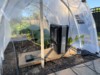 |
Lived in Vermont my whole life so i cant say as though Im surorised with the volatile soring temperatures. Less than a week after packing away the heater, thermostat, and greenhouse plastic - all of it had to come back out again. We had two 90-degree days this week. Tonight there's a frost advisory. Of course it lands on pollination day, arguably the most temperature-sensitive moment of the entire season.
No complaints though. Got a mini hoop house set up over the fruit zone and it's dialed in at a steady 70 degrees. Pollen tubes are growing in comfort tonight.
Honestly I may keep this structure up through most of the cell division window. Cell division rate is directly temperature dependent and every night I can keep the fruit temperature between 68-72 should have a positive impact on final cell count and I'm leaving nothing on the table.
Here's to hoping the plant makes it through tonight. Allllll the fingers crossed.
|
|
|
Friday, May 22
|
View Page
|
 |
Woke up at 4am to find temps well below the forecast 40 degrees, sitting at 33 with a feels-like of 29. Walked outside expecting the worst.
The plant took a light frost, mostly on the younger secondary leaves at the tips. But the 2741 recovered surprisingly well. Looking at it now in the evening sun you'd barely know it happened. These genetics are tougher than I expected.
The mini hoop house held steady at 70 degrees all night around the fruit and vine tip. That's what matters most.
36 hours post-pollination and I'm not overwhelmed by swelling yet, but it's still early. The ovary has rounded out and the peduncle looks strong. No yellowing, no softening. Fingers still crossed.
|
|
|
Monday, May 25
|
View Page
|
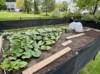 |
Well, here we are. Fifty-five days from seed, 37 days since she went in the ground, and 4 days after pollination on the first fruit.
Main vine is pushing 22 feet, which feels good for where we're at in the year. The pumpkin I set at 17 feet is moving slow and honestly I'm not surprised. That first night after pollination we dropped to 33 degrees, which couldn't have helped. On top of that, the plant had only been in the ground 33 days at pollination, so I figure she's still pouring a lot of energy into root development rather than fruit. We'll see what she does, but I'm not counting her out yet.
The more exciting one is the fruit sitting at 21 feet out on the main. This is the one I've got real hope for. I've got her set up under a nursery tent to buffer those cold Vermont nights, and she should be ready to pollinate later this week. The timing here is much better: more mature plant, ideal number of days to weigh-off.
|
|
|
Monday, May 25
|
View Page
|
 |
4 DAP, 17ft out. Slow going.
|
|
|
Monday, May 25
|
View Page
|
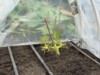 |
21ft out. Should be ready to pollinate by Friday. This will be my race horse if she takes.
|
|
|
Monday, June 1
|
View Page
|
 |
Culled the 17-footer. All-in at 21 feet.
She was healthy, symmetrical, and at 11 DAP sitting around volleyball size. Cut her open and everything looked good inside: solid wall thickness, seeds developing, clean flesh. No regrets on the pollination. She just wasn't pushing the skin tight the way I wanted to see, and the daily growth numbers weren't where they needed to be.
The 21-footer is officially the horse. Only 3.5 DAP so it's early, but she looks like a confirmed pollination. Great stem, good size ovary going in, more mature plant at pollination, and 110 days to the Sam Mazza's weigh-off. The timing is as good as it gets.
Built out a proper shelter over her tonight along with a cold frame to keep her at 70 degrees overnight through the cell division phase. Vermont nights are still dropping into the 40's.
Daytime highs in the 70's and 80's for the foreseeable future. Time to find out if I made the right 'cull'.
|
|
|
Monday, June 1
|
View Page
|
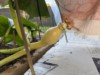 |
This year's horse. The 2741 Haist x Self. Pollinated on 5/29. 3 DAP.
|
|
|
Wednesday, June 3
|
View Page
|
 |
The gamble is paying off.
At exactly 5.5 DAP, Champ is measuring approximately 70% percent larger by volume than the 17-footer was at the same stage. And that's with sharing plant energy with the fruit I just culled up until 3 DAP.
Since going all-in, the growth rate has been noticeably better. The skin is tighter. The shape is filling out.
The cull decision was agonizing. The 17-footer was a healthy, committed fruit and I second-guessed it constantly. But the data doesn't lie. Better stem, bigger ovary going in, more mature plant at pollination, the structural advantages I couldn't ignore.
Let's gooooo!
|
|
|
Monday, June 8
|
View Page
|
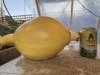 |
Ten days in and the 2741 Haist is doing exactly what was hoping it would do.
Earlier this season I was running two fruits simultaneously and I made the decision to cull the fruit at 17ft down the main vine. At 10 DAP my current fruit is carrying more than double the volume of the culled fruit at the same stage. The cull decision gets easier to validate every day I measure.
The focus right now is cell division. Every decision this week has been made through that lens. To help, I've been maintaining 70°F overnight in the hoop house, which directly supports mitotic rate.
On the biology side I've been misting the fruit skin directly with Kelpak, an Ecklonia maxima extract that's exceptionally high in cytokinins, specifically zeatin and zeatin riboside. These are the primary mitotic cytokinins that signal dividing cells to keep dividing. My hope is that direct skin application puts them exactly where they need to be during the peak division window. Soil drenches are running Kelpak, Triagrow (triacontanol), SP-1, Azos Red, Companion, and Mykos mycorrhizae - the goal is a biological root system to allow these genetics to grow to their potential. Roots and shoots as they say.
Fungicide and insecticide rotation has started.
The one concern is the canopy. The leaves have taken some punishment; a quarter-inch hailstorm, a light frost earlier in the season, and consistent wind exposure. They're showing age earlier than I'd like. The photosynthetic factory needs to stay productive through at least DAP 60 to hit the numbers I'm targeting. Foliar with silica and Aluminet shade cloth goes up this week to reduce thermal and mechanical stress and extend leaf longevity.
|
|
|
Thursday, June 11
|
View Page
|
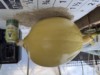 |
13 DAP. It's been hot, humid, and a good amount of rain the past couple of days. The 2741 is responding well, near doubling in size the past two days. Quite the funny shape developing. It'll be interesting to see how it grows.
|
|
|
Wednesday, June 17
|
View Page
|
 |
Got the 30 percent aluminet deployed tonight just ahead of some serious weather. 45-55 mph gusts forecast for tomorrow. Cutting it close but it's up and secured.
The combination of the aluminet and the wind fence should diffuse the worst of it. Not foolproof against a direct gust but meaningfully better than bare canopy.
Secondary benefit I'm thinking about: with an early May 29 pollination and a September 19 weigh-off, I've got 112 days to fill. Prolonging leaf efficiency deep into August is going to matter. The aluminet buys me that by reducing thermal stress to keep the canopy working longer. Not just a storm fix, a season-long investment.
|
|
|
Thursday, June 18
|
View Page
|
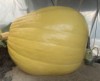 |
Twenty days in she's finding her stride sitting at 154.5" OTT, GPC estimated weight 88 lbs, and the daily growth rate is accelerating. 24 lbs in the past two days.
Six days left in the cell division window. Feeding accordingly, although trying to ensure I don't go too crazy with the hormones after seeing a pattern emerge with fellow growers.
One last thing, she needs an official name. Drop your suggestions in the comments!
|
|
|
Sunday, June 28
|
View Page
|
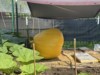 |
After dozens of names sent in to name her I'm proud to introduce Big Booty Judy. Girls got a blossom end that would make most onlookers blush.
|
|
|
Sunday, June 28
|
View Page
|
 |
The aluminet is magical. Most afternoons above 80 my leaves were wilted as can be, especially when humidity was low. Not anymore. 85 degrees, 30 percent humidity, and full sun today and they were happy as can be. I've also noticed a massive reduction in wind damage. My only regret is not getting it up sooner. Lesson learned for next season.
|
|
|
Sunday, June 28
|
View Page
|
 |
Carson is quite happy with the beautiful outdoor weather this weekend, and so isn't Judy. This is the first dry weekend we have had since April 25-26. Before that we have to go back all the way to October of last year for a weekend without precipitation. Bring on the warmth and sun!
|
|
|
Sunday, June 28
|
View Page
|
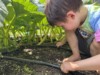 |
I'm almost embarrassed to admit but I didn't get the drip irrigation going until June 27th. I also hadn't fed the plant for 10 days prior. We had a lot of rain so I'm sure that mitigated some.
Carson helped me get it going and was very fascinated.
Between the drip feedings, aluminet, and hot weather on the way, all systems are a go!
|
|
|
Thursday, July 2
|
View Page
|
 |
Trouble in pumpkin paradise.
Big Booty Judy's booty was so large even she couldn't hang. Split her blossom end wide open which unfortunately means she's as good as compost.
She was slow and steady putting on around 20 pounds per day over the past week. Lots of growing time left in the season so I'm sure she had personal best potential. What could have been.
We have had on and off torrential rain the past few days, combined with heat and humidity. I anticipate a rapid growth spurt, combined with her oddly shaped blossom end, both contributed to the split.
Her OTT at 34 DAP was 240.75" for a chart estimated weight of 330lbs. I did cut her into chunks and weighed each piece. Her unofficial weight was 348lbs, 5.3% heavy to chart.
|
|
|
Thursday, July 2
|
View Page
|
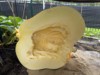 |
A cross section of Judy. Nice and thick all the way around. While her blossom end was a bit thinner, nothing that I would warrant a split. I think it purely came down to not having enough cell division and then expansion at the blossom creating too much stress as the fruit grew around it.
|
|
|
Sunday, July 12
|
View Page
|
 |
I've been waiting eagerly to get another pollination on the vine since Big Booty Judy blew her blossom end. July 11th was finally the day!
I'm not going to lie, going from feeling way ahead of the game with a May 29th pollination to suddenly feeling behind has been a tough pill to swallow. But there is only one thing to do in this hobby: full steam ahead.
A HUGE shoutout to fellow growers John Young and Kerry Young for letting me raid their patch for male flowers at 10:00 PM the night before pollination to ensure I beat the bees. I was able to collect five pristine males off their 2029 Momirov plant to get this done. By the way, VTJohn's patch is even more pristine in person!
The master plan for this year was always to cross big, heavy orange into the 2741 Haist. The 2029 brings exactly that. I was messaging Adam Momirov earlier in the season, and he told me the 2029 was the most intensely orange pumpkin he had ever seen in his life.
The Cross: 2741 Haist x 2029 Miramov
The zip-tie is on. Time will tell over the next day or two but hoping we are back in the game. Full steam ahead!
|
|
|
Saturday, August 1
|
View Page
|
 |
Plant was fully terminated when I left for an 8 day vacation. Came back to the plant exploding with growth reaching to the sky. I get the whole "don't go on vacation during growing season".
Going to be a pain in the butt sorting through all that!
|
|
|
Saturday, August 1
|
View Page
|
 |
This right here is Tiny Tina. My backup pumpkin after Big Booty Judy blew out her blossom end on July 2nd at 34 DAP.
Tina is located around 10 feet down a secondary that is 20 feet down the main vine. She's a slow grower, hence the name. She is looking to be a wheel shape. At this point I'm just hopeful to have one for the weigh off on September 19th so that Carson can be a part of the fun.
|
|
|
Wednesday, August 5
|
View Page
|
 |
DAP 25; Two New Splits, Cross-Cut and Sealed
Came out this evening to two fresh stem splits, both sizable. First move: checked for a breach into the seed cavity. Backlit it, checked for weeping or pulp, smell test. Clean. Still solid flesh, no cavity access.
Growth is holding steady. Not stalling, just slow. This fruit was never going to post the numbers Judy was tracking before we lost her, and DAP 21-25 confirms it: real but modest gains, nothing like a peak-window surge.
Cross-cut both ends of each split to stop them from running further. Dabbed diluted hydrogen peroxide at each site, packed with fungicide, fan on the area to keep it dry.
Hoping that's the last of the drama but this plant's track record makes it hard to feel confident it's done but I guess the bright side is it's forcing me to refresh all these skills I haven't had to use for the past 13 years!
|
|
|
Friday, August 7
|
View Page
|
 |
Here we go. blossom end is getting white and soft.
|
|
|
Saturday, August 8
|
View Page
|
 |
Her growth rate is accelerating but I'm afraid it's short lived as the blossom end rot continues to accelerate as well.
Carson is pretty disappointed but looking at the bright side. "Maybe if we ask another grower by saying please with a smile on our face then we can still get one for Halloween". Love the innocence of a four year old.
This year's challenges will make next year's successes be that much more appreciated. Perspective is everything.
|
|
|
Tuesday, August 11
|
View Page
|
 |
Well, that's a wrap.
My only plant, the 2741 Haist, is officially done. That blossom end fight we've been having all week finally won. No coming back from that.
Honestly? This pumpkin was me limping into the finish. So while it's unfortunate, the timing couldn't be better. Just got back from the VGPG patch tour and my head's already planning ahead to next season. I guess sometimes the season ending early just means the next one starts early too.
Time to pull the plant, clean up the patch, and start turning this year's notes into next year's plan. I've got a list of changes a mile long already.
Onward and upward. See you at weigh-off day cheering everyone else on this year, and back on the scale myself next.
|
|
|
Thursday, August 13
|
View Page
|
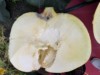 |
The 2741 Haist was a bear, but she grew dense pumpkins. Tina, while only taping 155 lbs, weighed in at 197.6, 27.5% heavy to chart. I'm sure the chart is a bit off on the low end, but I'll take any win I can get after this challenging season! lol.
|
|
|
Sunday, August 16
|
View Page
|
 |
Pulled the whole plant today. Carson and Emily on the crew, made quick work of it.
Stump was clean. Vines were clean as well. No signs of rot anywhere. All roots that were pulled looked white and healthy. Bug count was basically zero, and what we did find was dead. Not what I expected pulling a plant in mid-August where I had dialed back insect prevention once Judy went down. Powdery mildew had set in here and there, but I'm not surprised given it has been over a month since I sprayed.
The real finding was root response to the burial mix. Everywhere I'd buried a node in Seacoast Potting mix, the roots went nuts. This was especially true where roots were on top of the old play sand zone. The 3" layer where Judy sat earlier in the season. Roots under and through that sand didn't just proliferate, they knit into a mat close to 4" thick. Pulled up almost as one piece. Worth thinking about more before next season. Sand isn't nutritionally doing anything for the plant, so the response has to be structural: drainage, aeration, temperature buffering, something about pore structure that the roots were keying into in combination with rich potting mix on top combine with drip irrigation.
Had to take the obligatory photos of the main vine and the crown pulled out of the ground. Hard to believe this plant was just a seedling four months ago.
|
|
|
Sunday, August 16
|
View Page
|
 |
Stump was healthy as can be.
I took extra care this spring to prepare the area around the stump with soil that would keep it dry. Lots of Pro Mix HP and compost, mounded around 12" above the surrounding area.
|
|
|
|




 TowneFamilyVT - 2026 Grower Diary
