| |
|
Entry Date
|
Nick Name
|
Location
|
|
Thursday, July 09, 2026
|

|
Matt D.
|
Connecticut
|
 |
Entry 19 of 33 |
 |
|
|
|
Shade Nettings Impacts and Percentages
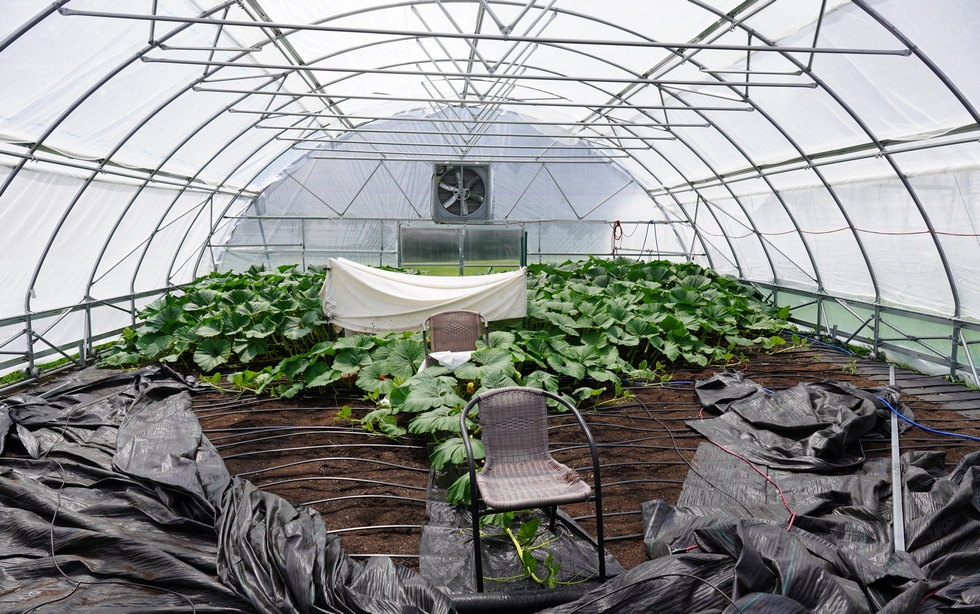
A PAR measurement taken beside a plant growing under 6 mil greenhouse grade plastic combined with 30% shade netting produced a reading of 902 μmol/m²/s, representing roughly a 50% reduction in light intensity compared to full sun.
This reduction exceeds the nominal 30% shade rating for several reasons. Greenhouse plastic typically filters approximately 10% of incoming light. When plastic and shade netting are used together-especially on a curved hoop structure-the combined materials diffuse and scatter light more than a flat surface would. As a result, the measured value falls well within the expected range for this setup.
For growers using only shade netting between the sun and their plants, 40% shade material is generally recommended for pumpkins and squash. The optimal percentage depends on both geographic location and crop type. For example, lettuce and other leafy greens require relatively low light and can benefit from higher shade percentages, while ferns and certain tropical species may thrive under 80% shade.
Geographically, growers located closer to the equator can typically use higher shade percentages due to naturally stronger solar intensity. For most giant pumpkin growers-who tend to be in temperate regions-30% shade when plastic is also present, or 40% shade for open field growing, serves as a reliable starting point.
Color selection introduces another layer of consideration, but that discussion will continue in the next post.
|
|
|