| |
|
Entry Date
|
Nick Name
|
Location
|
|
Monday, March 08, 2010
|

|
Perriman
|
Warwood
|
 |
Entry 2 of 4 |
 |
|
|
|
COMPOST
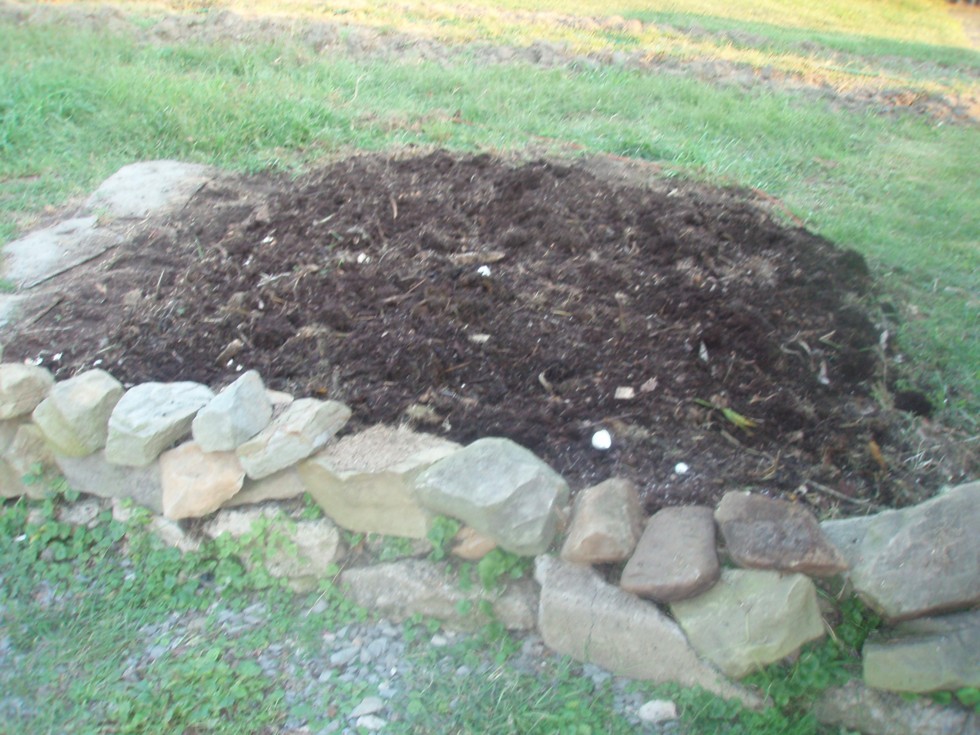
This is just 3 yds. of the type compost that I use to put on my patch. It is 2-3 yrs. old from a local horse stable with added compost of vegetable refuse, forest humus, used potting soils etc. I used about 12 yds total to start this "new ground" (used to be woods and pasture type conditions, never having been used to grow on except for a small section maybe 400 sq.ft. an old herb garden about 10 yrs. ago. I'm excited as "new ground" tends to be ideal for lack of disease and nutrient filled supersoil-like conditions. I like to keep a goal of 10% organic matter. The compost was used to fill trenches every 3 ft. in a square checkerboard pattern, and then more to spread over the garden about 3" over the entire patch. I then spread 3" of shredded leaves, mostly maple leaves, maybe 10% being other type leaves like oak, gum, sycamore and very little pine refuse. Growers often don't believe in using pine refuse but a University study found that it helps at up to a 20% rate to subdue diseases like Fusarium and other disease significantly. Good finished compost is rarely over applied at any rate, as long as you keep the OM around 10% of unbroken down material. I attempt to apply the compost all by the end of November but it's usually never too late to apply good compost. This will be all tilled in deeply (8-10") at a later spring date.I add another 3 yds. in the spring. I can't over emphasize the benefits of compost. You can find countless scientific studies to defend it's nutrient, beneficial bacterial, and disease suppressive qualities. If there's any so-called secret to growing these giants I would pick compost as
#1.
|
|
|